Advocate · Author · Public-Policy Strategist · Public Voice
Securing Justice.Serving the Public.
Law. Public Policy. Political Strategy. Cross-Border Opportunity.
TTransparentRResilientPProficient
Advancing Accountability. Building Bonds. Forging Futures.

01 / Profile
Proven in Practice.
Present Across Borders.
Complex questions require informed judgment.
Dr. Gautam Ghosh is a governance strategist, legal professional and author whose multidisciplinary work spans law, politics, public policy, global affairs, international relations and institutional reform. Working at the intersection of these disciplines, he brings legal insight, political experience and strategic perspective to complex questions of governance, connecting ideas with institutions, policy with action, and international relationships with opportunities for meaningful cooperation.
As CEO of Upper Chambers International Law Firm and General Secretary of the India–Canada Consortium, Dr. Ghosh brings together legal practice, public policy engagement and international institutional relationships. His professional interests encompass public diplomacy, diaspora engagement, trade, cross-border strategic investment facilitation and international cooperation, with particular emphasis on India–Canada relations and opportunities across North America and beyond. His approach seeks to connect political vision with practical strategy, strengthen relationships among policymakers, institutions, businesses and communities, and translate international engagement into productive partnerships.
Central to his professional philosophy is a commitment to institutional capacity, advancing administrative accountability and upholding the rule of law within democratic systems. His work extends to governance reform, policing and police accountability, human rights, education and public administration, emphasising institutional integrity, administrative effectiveness and the development of transparent, responsive and accountable public institutions.
Dr. Ghosh’s commitment to public service dates to the late 1980s, when his involvement in humanitarian and social initiatives brought him into contact with Mother Teresa in Kolkata. These formative experiences helped shape his enduring emphasis on ethical responsibility, social welfare and public accountability. His entry into active politics in the late 1990s marked a significant expansion of his engagement with public affairs, political institutions and democratic governance.
An established author on policing reform and institutional accountability, Dr. Ghosh has contributed to scholarly discourse on police legitimacy, public administration and democratic governance. His published works are held in the collections of internationally recognised research libraries, including the British Library, the London School of Economics and Political Science Library, the National Library of Australia and the Shanghai Library, among others. Their presence in these collections makes his scholarship accessible to an international community of researchers, academics and public policy professionals.
Born into a distinguished academic and public-service family in West Bengal, Dr. Ghosh is the son of the late Dr. Ramesh Ghosh and Dr. Bela Ghosh. His upbringing fostered an enduring appreciation for intellectual inquiry, academic excellence, merit-based institutions, administrative discipline and the responsibilities of public service.
His academic qualifications include a Bachelor of Commerce (Honours), Bachelor of Laws (LLB), Master of Business Administration (MBA), Master of Arts (MA) and Doctor of Philosophy (PhD), providing a multidisciplinary academic foundation spanning commerce, law, management and the social sciences.
Bringing together legal practice, political engagement, academic scholarship and international experience, Dr. Ghosh approaches governance as an interconnected discipline in which institutional credibility, public accountability and strategic cooperation are fundamental to sustainable progress. His professional outlook combines a commitment to democratic principles with an emphasis on institutional effectiveness, constructive international relationships and opportunities for economic and social advancement.
His overarching vision is to strengthen institutions, advance accountable governance and foster meaningful international cooperation—connecting law, policy, people and opportunities across borders in pursuit of democratic progress and sustainable development.
Law · Public Policy · Political Strategy · India–Canada Relations & TradeCounsel, institutions and the public interest
Legal Practice
Applying law to questions of rights, responsibility and institutional trust.Books, essays and policy argument
Published Thought
Developing evidence-led perspectives on policing, democracy and governance.Political engagement and democratic participation
Public Affairs
Bringing direct experience of public life to policy dialogue and institutional reform.India · Canada · United States
International Cooperation
Building purposeful relationships among governments, civic institutions and enterprise.Intellectual Foundations
Scholarship Across Generations. Service Through Institutions.
Dr Gautam Ghosh’s public outlook was shaped by a family tradition in political scholarship, academic leadership and institutional service.
Dr. Ramesh Chandra Ghosh (R. C. Ghosh)
The scholarly achievement of Dr. Ramesh Chandra Ghosh cannot be fathomed by a single write-up. The surviving record reveals a scholar of exceptional range whose intellectual world embraced comparative political science, constitutional history, federalism, international law, treaty-making, parliamentary institutions, civil liberties, Islamic constitutional development, Swiss government and the constitutional jurisprudence of India. His scholarship crossed geographical boundaries, disciplinary boundaries and, remarkably, generations of scholars. He was, in the fullest sense, a moving encyclopaedia of Political Science—a scholar whose intellectual horizon extended far beyond any single university, country or conventional academic specialisation.
The institutional setting in which much of this achievement developed was Presidency College, Calcutta, one of India's historic centres of higher learning.
The official history of the Department of Political Science at Presidency University identifies Ramesh Chandra Ghosh among the eminent figures associated with the Department and its intellectual tradition. Yet the importance of Presidency College in his life should not be allowed to obscure the international character of his scholarship. Presidency College was one of the homes of his intellectual life; the wider world of comparative political, constitutional and international thought was its true horizon.
The early record already displays the breadth that would characterise his career. In 1939, Ramesh Chandra Ghosh, identified as M.A., B.L., Lecturer in Economics, published “Renaissance and Reformation in India” in the Proceedings of the Indian History Congress, Vol. 3, pp. 1565–1566. The paper demonstrates that his intellectual interests were never restricted to institutional mechanics. History, political ideas, social transformation and constitutional development formed part of a single field of inquiry.
By 1941, that intellectual horizon had expanded decisively into comparative constitutionalism. Ghosh published Constitutional Developments in the Islamic World, Lahore: Shaikh Muhammad Ashraf. Six years later came his more ambitious documentary enterprise, Constitutional Documents of the Major Islamic States, Lahore: M. Ashraf, 1947. The work placed Ghosh in the company of scholars attempting to assemble and interpret constitutional materials across the Islamic world at a moment of enormous political transformation.
The subsequent institutional record confirms that the 1947 book did not disappear into the past. It remains recorded in the Bangladesh National Parliament Library, which identifies the Lahore, M. Ashraf, 1947 edition, and it is also recorded in the State Bank of Pakistan Library. Its continuing presence in institutional collections in Bangladesh and Pakistan is particularly relevant to understanding the regional reach of Ghosh's scholarship. The constitutional histories of these countries were themselves products of the great transformations of the Islamic and South Asian political world that Ghosh had sought to document.
The work subsequently entered the wider international literature on historical constitutional sources. John Trone's “Print Sources for Historical Constitutions,” published in the International Journal of Legal Information, specifically identifies Ghosh's 1947 volume among printed sources for historical constitutions. Trone's work is important because it is itself a guide to the documentary sources used by scholars researching historical constitutional systems. Ghosh's book had therefore become part of the research infrastructure of comparative constitutional scholarship.
The international reach of the 1947 book becomes even more compelling in the documentary record of the United Nations. One UN document expressly identifies the source as “Constitutional Documents of the Major Islamic States, Prof. Ramesh Chandra Ghosh, Muhammed Ashraf, Lahore (Pakistan), page 82,” in connection with the 1936 Anglo-Egyptian Treaty. This is not a generic bibliographical listing: the UN document directs the reader to a specific page of Ghosh's work.
A second United Nations document provides an equally important page-specific reference. In connection with the 1899 Anglo-Egyptian Agreement concerning Sudan, the source is expressly given as “Constitutional Documents of the Major Islamic States, Prof. Ramesh Chandra Ghosh, Muhammed Ashraf, Lahore (Pakistan), page 120.” The two references, taken together, establish that Ghosh's book was being used by the United Nations as a documentary source for important historical international arrangements.
This is one of the strongest pieces of evidence for the international stature of his scholarship. A work published in Lahore in 1947 by an Indian scholar had subsequently entered the documentary record of the United Nations, with the organisation directing attention to specific pages of the book. Ghosh's scholarship had therefore moved beyond the academic world into the evidentiary apparatus of an international institution.
The broader literature surrounding Iran and the Middle East provides further evidence of the continuing relevance of this body of work. Bahram Navazeni's edited volume Iran and the World: Some Contemporary Developments (Cambridge Scholars Publishing, 2010) belongs to the later literature examining Iran's place in the contemporary political order. Richard N. Frye's Greater Iran: A 20th-Century Odyssey likewise represents an important later work on the historical and political world within which Ghosh's Iranian constitutional interests may be situated. These sources should be treated as later comparative and historical scholarship; a precise author-to-Ghosh citation should be stated only where the relevant primary page is confirmed.
The same caution applies to the United States Department of the Army's Middle East: Tricontinental Hub: A Strategic Survey, Department of the Army Pamphlet No. 550-2, 1965. The work belongs to the documentary literature on the political and strategic structure of the Middle East and has been identified in the research trail as another institutional source associated with Ghosh's constitutional scholarship. Its precise page citation to Ghosh should, however, be established from the Army scan before being represented as a direct quotation or citation.
Later comparative literature concerning Afghanistan, Iran and Pakistan also belongs to this intellectual chain. Ali Banuazizi and Myron Weiner's The State, Religion, and Ethnic Politics: Afghanistan, Iran, and Pakistan, Syracuse University Press, 1988, examines the relationship among state formation, religion and ethnic politics in precisely the wider political world in which Ghosh's constitutional studies acquired their significance. Similarly, K. J. Newman's Essays on the Constitution of Pakistan, Dacca: Pakistan Co-operative Book Society Ltd., 1956, belongs to the contemporary constitutional literature of Pakistan in which Ghosh's documentary work on Islamic constitutions is highly relevant.
The constitutional crisis surrounding Federation of Pakistan and Others v. Moulavi Tamizuddin Khan, PLD 1955 Federal Court 253, likewise provides an important contemporary constitutional context for understanding the significance of Ghosh's work on Islamic constitutional documents. The case itself belongs to the formative jurisprudence of Pakistan's constitutional order. A specific Ghosh citation within the reported case or Jennings' treatment should, however, be confirmed from the primary report before being stated as a direct citation.
The continuing use of Ghosh's Iranian constitutional scholarship is also represented by the later article “Religio-constitutional Institutions of Iran in 20th Century: Relevance and Viability for the Future.” The article belongs to later Iranian constitutional scholarship and has been identified in the research record as engaging Ghosh's work. Its exact quotation and page should be checked against the original Civilica text before a page-specific claim is made. Nevertheless, its inclusion is important because it demonstrates that Ghosh's constitutional work remained relevant to later scholarship on Iranian institutional development.
Ghosh's intellectual range was not confined to the Islamic world. In 1953, he published The Government of the Swiss Republic, Calcutta: The World Press Ltd., ix + 192 pages. Switzerland was an especially demanding comparative subject because its political system combined federalism, cantonal autonomy, direct democracy and constitutional structures markedly different from the Westminster model familiar to many Indian scholars.
The contemporary reception of the Swiss book is independently documented. The American Political Science Review published a review entitled “The Government of the Swiss Republic. By Ramesh Chandra Ghosh” in Vol. 48, No. 2, June 1954, pp. 578–579, under Foreign and Comparative Government. The review establishes that Ghosh's comparative study of Switzerland had entered the international professional literature of political science.
A further contemporary review has been reported in P. Campbell's notice of The Government of the Swiss Republic in Political Studies, Vol. 7, No. 1, pp. 101–102. This reference should be retained in the research record, although the journal page should be consulted directly before presenting the review's substantive assessment as verified evidence.
The same caution applies to the reported L. C. Green review of Ghosh in the International and Comparative Law Quarterly, Vol. 12, No. 4, pp. 1431–1432. Green's independently verified 1963 review in Malaya Law Review is stronger evidence and is discussed below; the ICLQ reference should remain identified as a research lead until the primary journal page is checked.
Ghosh's interest in federalism and comparative government ultimately found one of its fullest expressions in Treaties and Federal Constitutions: Their Mutual Impact, published in Calcutta by The World Press in 1961, a substantial work of 342 pages. The book brought together subjects that were rarely treated as a single field: federal government, constitutional authority, treaty-making and international law.
Its contemporary reception was significant. T. S. Rama Rao reviewed the book in India Quarterly, Vol. 19, No. 2, 1963, pp. 160–161. In the same year, L. C. Green reviewed Treaties and Federal Constitutions—Their Mutual Impact in Malaya Law Review, Vol. 5, No. 2, pp. 431–432. The appearance of contemporary reviews in two different scholarly environments demonstrates that the work had already travelled beyond the immediate intellectual environment in which it was written.
The subsequent international-law citation trail is even more revealing. In 1970, Okon Udokang published “Succession to Treaties in New States” in the Canadian Yearbook of International Law, Vol. 8, pp. 123–156. In Footnote 10, Udokang directly cites R. C. Ghosh, Treaties and Federal Constitutions: Their Mutual Impact, pp. 16–21. Another reference again directs the reader to Ghosh's discussion at pp. 20–21. This is a direct, page-specific scholarly citation in a specialist international-law journal.
The significance of Udokang's citation is considerable. Ghosh was not merely appearing in a bibliography; his analysis was being used in a substantive discussion of succession to treaties in newly independent states. The conceptual relationship between federal constitutional structures and international obligations that Ghosh had explored in 1961 was thus being drawn upon by international-law scholarship less than a decade later.
The citation trail continued. Later commentary on the Vienna Convention on the Law of Treaties cites “Ghosh (1961), p. 81” in its discussion of the international legal position of constituent units of federal states and includes Ghosh's book among its authorities. This later citation is particularly significant because it demonstrates that Ghosh's work continued to be relevant to international-law analysis of the relationship between federal constitutional arrangements and international agreements.
A further line of scholarship carries the citation to p. 84. Ivan Bernier's International Legal Aspects of Federalism, London: Longman, 1973, is associated in later scholarship with Ghosh's discussion of the treaty-making position of constituent units of federations. Later work on subnational foreign economic relations in Nigeria reproduces the citation chain and identifies Ghosh (1961), p. 84, through Bernier. The importance here lies in the transmission of Ghosh's analysis through subsequent generations of international-law scholarship.
The same continuing visibility appears in Ryan Morrow's “Treaties and the Federal Balance in an Era of Globalization,” which cites Ghosh's 1961 work at p. 292 and includes it in its bibliography. This source should properly be regarded as corroborative rather than authoritative—the article itself identifies its student-paper character—but it nevertheless provides evidence that Ghosh's book continued to be consulted in later discussions of the federal balance and treaty-making.
There is also a reported later reference through A. H. Mubarak's International Law and Treaty Succession in New States, Oxford University Press, 1970. This work belongs directly to the field in which Ghosh's 1961 book operated. The precise Ghosh citation in Mubarak should be verified from the primary volume before being presented as a page-specific citation, but the reference deserves retention in the broader citation history.
Likewise, Covey T. Oliver's “The Enforcement of Treaties by a Federal State,” Recueil des cours de l'Académie de droit international de La Haye, Vol. 141 (1974), pp. 331–412, belongs to the international-law literature addressing federal states and treaty enforcement.
The evolution of Ghosh's scholarship is equally visible in his articles on Indian constitutional government. JSTOR directly records his “The Powers of the President & the Cabinet System,” The Indian Journal of Political Science, Vol. 13, Nos. 3/4, 1952, pp. 1–16. The same volume contains his “Parliamentary Privilege, Civil Liberty and Homi Dinshaw Mistri's Case,” pp. 38–56. These works demonstrate his engagement with some of the most fundamental constitutional questions of the early Republic: executive authority, cabinet government, parliamentary privilege and civil liberty.
In 1953, he published “Constitutional Decisions of the Supreme Court of India,” The Indian Journal of Political Science, Vol. 14, No. 2, pp. 98–112. These publications establish that Ghosh's scholarship operated at the intersection of political science and constitutional law. He was studying not merely constitutional texts but the actual operation of constitutional institutions and judicial authority.
The comparative constitutional environment in which he worked also included Helen Miller Davis's Constitutions, Electoral Laws and Treaties of States in the Near and Middle East, Duke University Press, 1947. Davis's book was an important contemporary comparative constitutional source and was later identified alongside Ghosh by Trone.
The same methodological care is appropriate when considering the later scholarship of Richard N. Frye and Bahram Navazeni. Frye's Greater Iran: A 20th-Century Odyssey and Navazeni's Iran and the World: Some Contemporary Developments are important later works concerning the Iranian political and historical world in which Ghosh's scholarship remains relevant. They strengthen the intellectual context in which Ghosh's work should be situated, but a specific citation by either author to Ghosh should be claimed only after the relevant page is directly verified.
The international-law significance of Ghosh's Treaties and Federal Constitutions: Their Mutual Impact becomes particularly striking when read against the later codification history of the law of treaties. The modern Vienna Convention on the Law of Treaties: A Commentary records that the 1935 Harvard Research in International Law Draft Convention on the Law of Treaties helped clarify many aspects of treaty law and that its definitions and rules became important points of reference for later discussions, including those of the International Law Commission. In the same Commentary, Ghosh's 1961 treatise is expressly cited at p. 81 in the discussion of treaty-making capacity in federal States. Thus, Ghosh's work belongs within the continuing scholarly genealogy through which treaty law developed from the Harvard codification project, through the work of the International Law Commission, to the 1969 Vienna Convention.
The reach of Ghosh's scholarship must also be understood through his students. The memorial volume The Political Miscellany: Essays in Memory of Professor Ramesh Chandra Ghosh, edited by Amal Kumar Mukhopadhyay, Calcutta: K. P. Bagchi & Co., 1986, x + 288 pages, provides important evidence of the intellectual community that survived him. The volume is not simply a memorial gesture; it records the continuing engagement of scholars with the intellectual legacy of their teacher.
Among its contributors was Sudipta Kaviraj, whose “The Self-Falsifying Prophecy,” pp. 15–22, appears in the volume. Kaviraj's own publication record independently identifies the contribution and the memorial collection. This is significant because it demonstrates the transmission of Ghosh's intellectual legacy into the work of later generations of political thinkers.
The numerical scale of Ghosh's doctoral supervision should nevertheless be stated with documentary discipline. The available record establishes a large and generational body of students and research scholars, but an exact assertion that “hundreds” of doctoral students completed their PhDs under him should be used only once the original memorial testimony establishing that figure is directly examined. The magnitude of his teaching legacy is beyond doubt; the exact numerical formulation should follow the primary source.
The entire documentary record therefore reveals a remarkable trajectory. In 1939, Ghosh was publishing on India's Renaissance and Reformation. In 1941, he was examining constitutional development in the Islamic world. In 1947, he produced his major documentary compilation of Islamic constitutional materials. That work entered institutional collections in Bangladesh and Pakistan, was identified in the international literature on historical constitutions, and was subsequently cited by the United Nations at pages 82 and 120. In 1952–53, he wrote on presidential power, cabinet government, parliamentary privilege, civil liberty and Supreme Court constitutional decisions. In 1953, he produced a major comparative study of Swiss government, subsequently reviewed in the American Political Science Review. In 1961, he produced his major study of treaties and federal constitutions, which was reviewed in India and Malaysia and subsequently entered international-law scholarship through page-specific citations extending from pp. 16–21 to pp. 81 and 84.
The international dimensions of his work are therefore not a matter of rhetorical inference. They are documented through a chain of books, contemporary reviews, United Nations citations, international-law articles, later comparative scholarship, institutional catalogues and memorial scholarship.
His 1947 book provides perhaps the clearest illustration. It was published in Lahore; catalogued in Bangladesh and Pakistan; identified by Trone as a source for historical constitutions; cited by the United Nations at p. 82 in connection with the 1936 Anglo-Egyptian Treaty and at p. 120 in connection with the 1899 Anglo-Egyptian Agreement concerning Sudan; and subsequently situated within a wider literature on Islamic constitutional development. Few biographical claims could demonstrate international scholarly reach more concretely.
His 1961 book provides the second great illustration. Contemporary reviewers recognised it in 1963; Udokang directly cited pp. 16–21 in the Canadian Yearbook of International Law in 1970; later Vienna Convention commentary cited p. 81; later federalism and international-law scholarship cited p. 84; and subsequent work continued to return to the book in discussions of the federal balance. This is not merely a record of publication. It is a record of intellectual transmission.
The breadth of his teaching completes the picture. His books demonstrate the range of his mind; his citations demonstrate the geographical reach of his scholarship; his memorial volume demonstrates the persistence of his influence; and the generations of students and researchers associated with him demonstrate the pedagogical dimension of his legacy.
It is therefore difficult to place R. C. Ghosh within any narrow academic category. He was a political scientist, but his work constantly crossed into constitutional law. He was a constitutional scholar, but his work moved into international law. He studied India, but also Switzerland, Iran, the Islamic constitutional world and federal treaty-making. He wrote for Indian journals, but his work was reviewed and cited in international scholarly literature and used in United Nations documentation.
That is why the description “a moving encyclopaedia of Political Science” is so apt. It captures not simply the quantity of his knowledge but the extraordinary range through which that knowledge moved.
R. C. Ghosh was not merely a scholar who wrote about Political Science. He was a scholar who seemed to carry Political Science within him.
His books crossed borders. His scholarship crossed disciplines. His ideas continued to travel through later scholarship. His students carried his influence forward.
And the documentary record—from Presidency College to the United Nations, from Lahore to Switzerland, from the American Political Science Review to the Canadian Yearbook of International Law, and from the constitutional literature of South Asia to later international-law scholarship—shows why his intellectual achievement deserves to be understood not as a local academic accomplishment but as part of a much wider history of comparative political and constitutional thought.
The scholarly achievement of Dr. Ramesh Chandra Ghosh cannot be fathomed by a single write-up. What can be demonstrated, however, is that his intellectual horizon was vast, his comparative scholarship unusually ambitious, his documentary contributions enduring, and his influence carried forward through institutions, international records, later scholarship and generations of students.
Presidency College was one of the homes of his scholarship; the world of comparative political, constitutional and international thought was its true intellectual horizon.
References
- Presidency University, Department of Political Science, “History of the Department,” official institutional history identifying Ramesh Chandra Ghosh among eminent figures associated with the Department.
- Ramesh Chandra Ghosh, “Renaissance and Reformation in India,” Proceedings of the Indian History Congress, Vol. 3, 1939, pp. 1565–1566.
- University of North Bengal Institutional Repository, Renaissance and Reformation in India, identifying Ramesh Chandra Ghosh, M.A., B.L., Lecturer in Economics, Krishnagar College.
- Ramesh Chandra Ghosh, Constitutional Developments in the Islamic World, Lahore: Shaikh Muhammad Ashraf, 1941.
- Ramesh Chandra Ghosh, Constitutional Documents of the Major Islamic States, Lahore: M. Ashraf, 1947.
- Bangladesh National Parliament Library, catalogue record for Ghosh's Constitutional Documents of the Major Islamic States, Lahore: M. Ashraf, 1947.
- State Bank of Pakistan Library, catalogue record for Ghosh's Constitutional Documents of the Major Islamic States.
- John Trone, “Print Sources for Historical Constitutions,” International Journal of Legal Information, Vol. 34, Issue 3, Winter 2006, pp. 539–555.
- United Nations, document expressly citing “Constitutional Documents of the Major Islamic States, Prof. Ramesh Chandra Ghosh, Muhammed Ashraf, Lahore (Pakistan), page 82,” in connection with the 1936 Anglo-Egyptian Treaty.
- United Nations, document expressly citing “Constitutional Documents of the Major Islamic States, Prof. Ramesh Chandra Ghosh, Muhammed Ashraf, Lahore (Pakistan), page 120,” in connection with the 1899 Anglo-Egyptian Agreement concerning Sudan.
- Ramesh Chandra Ghosh, The Government of the Swiss Republic, Calcutta: The World Press Ltd., 1953, ix + 192 pp.
- “The Government of the Swiss Republic. By Ramesh Chandra Ghosh,” American Political Science Review, Vol. 48, No. 2, June 1954, pp. 578–579.
- Ramesh Chandra Ghosh, Treaties and Federal Constitutions: Their Mutual Impact, Calcutta: The World Press, 1961, 342 pp., bibliography pp. 309–322.
- T. S. Rama Rao, review of R. C. Ghosh, Treaties and Federal Constitutions: Their Mutual Impact, India Quarterly, Vol. 19, No. 2, 1963, pp. 160–161.
- L. C. Green, review of R. C. Ghosh, Treaties and Federal Constitutions—Their Mutual Impact, Malaya Law Review, Vol. 5, No. 2, 1963, pp. 431–432.
- Okon Udokang, “Succession to Treaties in New States,” Canadian Yearbook of International Law, Vol. 8, 1970, pp. 123–156; especially Footnote 10, citing Ghosh, pp. 16–21, and subsequent reference to pp. 20–21.
- Oliver Dörr and Kirsten Schmalenbach (eds.), Vienna Convention on the Law of Treaties: A Commentary, later commentary citing Ghosh (1961), p. 81.
- Ivan Bernier, International Legal Aspects of Federalism, London: Longman, 1973, associated in later scholarship with Ghosh's discussion at p. 84.
- Later international-law scholarship on subnational foreign economic relations, citing Ghosh (1961), p. 84, through Bernier (1973), p. 14.
- Ryan Morrow, “Treaties and the Federal Balance in an Era of Globalization,” 2011, citing Ghosh's 1961 work at p. 292; retained as corroborative later scholarship.
- Ramesh Chandra Ghosh, “The Powers of the President & the Cabinet System,” The Indian Journal of Political Science, Vol. 13, Nos. 3/4, 1952, pp. 1–16. JSTOR stable 42743395.
- Ramesh Chandra Ghosh, “Parliamentary Privilege, Civil Liberty and Homi Dinshaw Mistri's Case,” The Indian Journal of Political Science, Vol. 13, Nos. 3/4, 1952, pp. 38–56.
- Ramesh Chandra Ghosh, “Constitutional Decisions of the Supreme Court of India,” The Indian Journal of Political Science, Vol. 14, No. 2, 1953, pp. 98–112.
- Amal Kumar Mukhopadhyay (ed.), The Political Miscellany: Essays in Memory of Professor Ramesh Chandra Ghosh, Calcutta: K. P. Bagchi & Co., 1986, x + 288 pp.
- Sudipta Kaviraj, “The Self-Falsifying Prophecy,” in Amal Kumar Mukhopadhyay (ed.), The Political Miscellany, pp. 15–22.
- Covey T. Oliver, “The Enforcement of Treaties by a Federal State,” Recueil des cours de l'Académie de droit international de La Haye, Vol. 141, 1974, pp. 331–412. Publication verified; direct citation to Ghosh requires primary-page confirmation.
- Helen Miller Davis, Constitutions, Electoral Laws and Treaties of States in the Near and Middle East, Durham, NC: Duke University Press, 1947. Direct Davis-to-Ghosh citation requires primary-text confirmation.
- Bahram Navazeni (ed.), Iran and the World: Some Contemporary Developments, Cambridge Scholars Publishing, 2010. Later comparative literature; precise Ghosh citation requires primary-text confirmation.
- Richard N. Frye, Greater Iran: A 20th-Century Odyssey, Costa Mesa, CA: Mazda Publishers, 2005. Later Iranian historical scholarship; precise Ghosh citation requires primary-text confirmation.
- United States Department of the Army, Middle East: Tricontinental Hub: A Strategic Survey, Department of the Army Pamphlet No. 550-2, 1965. Reported institutional reference to Ghosh; exact page requires primary verification.
- Ali Banuazizi and Myron Weiner, The State, Religion, and Ethnic Politics: Afghanistan, Iran, and Pakistan, Syracuse: Syracuse University Press, 1988. Later comparative literature; direct Ghosh citation requires primary-text confirmation.
- Federation of Pakistan and Others v. Moulavi Tamizuddin Khan, PLD 1955 Federal Court 253. Contemporary Pakistan constitutional authority; any direct Ghosh citation requires examination of the primary report.
- K. J. Newman, Essays on the Constitution of Pakistan: Including the Draft and Final Constitutions of Pakistan with Comments, Dacca: Pakistan Co-operative Book Society Ltd., 1956.
- Shahzad Iqbal Sham, “Religio-constitutional Institutions of Iran in 20th Century: Relevance and Viability for the Future,” Civilica. Later Iranian constitutional scholarship; exact Ghosh citation requires primary-text confirmation.
- P. Campbell, reported review of The Government of the Swiss Republic, Political Studies, Vol. 7, No. 1, pp. 101–102. Primary journal-page verification required.
- L. C. Green, reported review of Ghosh in International and Comparative Law Quarterly, Vol. 12, No. 4, pp. 1431–1432. Primary journal-page verification required.
- A. H. Mubarak, International Law and Treaty Succession in New States, Oxford University Press, 1970. Reported Ghosh reference; precise citation requires primary-text confirmation.
- Harvard-associated catalogue/work-record evidence for Ramesh Chandra Ghosh's Treaties and Federal Constitutions: Their Mutual Impact.
- Sudipta Kaviraj, publication record confirming “The Self-Falsifying Prophecy” in The Political Miscellany, pp. 15–22.
- CiNii bibliographical record for Amal Kumar Mukhopadhyay (ed.), The Political Miscellany: Essays in Memory of Professor Ramesh Chandra Ghosh, confirming the 1986 publication, editor, publisher and pagination.
Dr. Bela Ghosh
Scholar • Educator • Public Servant • Humanitarian
A political scientist, educationist and former Chairperson of the West Bengal Public Service Commission, Dr Bela Ghosh combined academic leadership with public responsibility.
Her example helped shape a family commitment to merit, education, institutional integrity and public service.
Dr. Bela Ghosh was a distinguished scholar, educator, academic leader, public servant and humanitarian whose life combined intellectual achievement with a sustained commitment to education and service to society. Educated at the London School of Economics and Political Science (LSE), she built a distinguished professional career extending from higher education and academic leadership to senior public service, culminating in her service as Chairperson of the West Bengal Public Service Commission.
Her academic credentials were exceptional. On 9 July 1959, she was awarded the M.Sc. in Economics by the University of London through the London School of Economics and Political Science. Her education at LSE provided a rigorous intellectual foundation for a career that subsequently encompassed teaching, academic administration, public service and social welfare.
A scholar and teacher
Dr. Ghosh subsequently established herself in higher education in Bengal and served as Head of the Department of Political Science at Lady Brabourne College, Calcutta. Her academic career coincided with an important period in the development of women's higher education in Bengal. Lady Brabourne College introduced Political Science at the Pass and Honours levels in 1960, marking an important stage in the development of the discipline within the institution. Her leadership of the department therefore placed her within a formative period in the intellectual life of one of Bengal's significant institutions of women's higher education.
From political science to public administration
Her professional career later extended into senior constitutional public service. Dr. Bela Ghosh served as Chairperson of the West Bengal Public Service Commission. Most importantly, the West Bengal Public Service Commission's own official record identifies Dr. Bela Ghosh as a former Chairperson of the Commission. This institutional record constitutes the primary authority for this important phase of her career and should be distinguished from later biographical accounts that merely corroborate her position. Her transition from academic leadership to the leadership of a constitutional public institution represented a significant extension of her professional responsibilities and public service.
Yet Dr. Bela Ghosh's life cannot be fully understood through academic distinction and public office alone. Education and service to the poor and disadvantaged were enduring principles of her life. Her humanitarian outlook extended beyond formal institutional responsibilities towards people and communities who had limited access to educational and social opportunities. Biographical material associates her with the Missionaries of Charity and the humanitarian work of Mother Teresa, including efforts directed towards the education and welfare of poor and disadvantaged children.
Her philanthropic commitment was particularly significant in the field of education for marginalised and economically disadvantaged sections of society. She supported the development of educational opportunities for children who, because of poverty and social circumstances, might otherwise have remained excluded from quality education. Her concern for the downtrodden was therefore not simply charitable in the narrow sense; it was connected to a broader conviction that education could provide dignity, opportunity and a pathway towards a better life.
This philosophy found an institutional continuation through the Dr. B. G. Memorial Trust, established in her memory. The Trust has been associated with educational and philanthropic activities, including the provision of educational opportunities through schools and colleges. Independent documentary evidence concerning the Trust records its charitable objects as including relief of the poor, education, medical relief and other objects of general public utility, and records the Trust's operation of St. Peter's School in Kolkata. The Trust consequently provides a tangible institutional expression of the educational and philanthropic values associated with Dr. Bela Ghosh.
The significance of this work lies in the continuity between her professional and humanitarian commitments. As an educator, she worked within institutions of higher learning; as a philanthropist, she sought to extend the benefits of education to those who had fewer opportunities to obtain it. Education, in her life, was therefore both a profession and a social instrument. Her academic career and her philanthropic engagement reflected a common belief in the capacity of learning to broaden opportunity and strengthen society.
An exceptional intellectual partnership
Dr. Bela Ghosh's professional achievements should also be distinguished clearly from those of her husband, Dr. Ramesh Chandra Ghosh, the distinguished political scientist and scholar. His intellectual contribution is documented in the Indian Journal of Political Science and in the memorial volume The Political Miscellany: Essays in Memory of Professor Ramesh Chandra Ghosh, edited by Professor Amal Kumar Mukhopadhyay and published by K. P. Bagchi & Co. in 1986. The volume brought together scholarly contributions reflecting the intellectual milieu associated with Professor Ghosh, including the political theorist Sudipta Kaviraj, whose contribution, “The Self-Falsifying Prophecy,” is recorded in his bibliography.
That intellectual environment forms part of the history of the Ghosh family, but Dr. Bela Ghosh's own achievements stand independently. Her professional record encompasses an M.Sc. in Economics from the University of London through LSE, academic leadership at Lady Brabourne College, service as Chairperson of the West Bengal Public Service Commission as confirmed by the Commission's own record, and sustained humanitarian and philanthropic engagement in education and social welfare.
Her commitment to education was also deeply expressed within her family. Following the early death of her husband, Dr. Bela Ghosh devoted herself to the upbringing and education of her children, placing exceptional value on learning and seeking to ensure that they received the strongest possible educational foundation and opportunities for intellectual and professional development. Her son, Dr. Gautam Ghosh, subsequently pursued his own academic and professional career.
The educational tradition associated with Dr. Bela Ghosh continued beyond her lifetime through the institutional work carried forward in her memory. The Dr. B. G. Memorial Trust represents one such continuing expression of her commitment to education and social welfare. Its documented charitable objectives and educational activities demonstrate that the values associated with her life have acquired an institutional dimension extending beyond her own professional career.
A woman who crossed institutional boundaries
Dr. Bela Ghosh's life therefore represents a distinctive contribution to the history of Indian women in higher education, academic leadership, constitutional public service and humanitarian work in the decades following Independence. Her journey extended from advanced study at the London School of Economics, through academic leadership in Kolkata, to the chairmanship of the West Bengal Public Service Commission and sustained engagement with education and the welfare of disadvantaged communities.
She moved between India and Britain in her education.
Between political science and administration in her profession.
Between the university and the state in her public career.
And between formal public institutions and humanitarian service in her philanthropy.
Few biographies can be reduced so simply to a single designation.
She was an LSE-trained political scientist.
She was an academic leader at Lady Brabourne College.
She became Chairperson of the West Bengal Public Service Commission.
And she devoted a substantial part of her life to philanthropic and humanitarian work.
Her own place in history
She should consequently be remembered not simply as the wife of a distinguished political scientist, but as a distinguished professional and humanitarian in her own right. Her intellectual accomplishments, academic leadership, public service, commitment to education, concern for the poor and disadvantaged, association with the humanitarian work of Mother Teresa and the Missionaries of Charity, and the educational and philanthropic legacy continued through the Dr. B. G. Memorial Trust together constitute a substantial record of public and social contribution.
Her life demonstrates how education can become public service, and public service can become a lifelong commitment to society.
Dr. Bela Ghosh's life was defined by education in its broadest sense: scholarship as intellectual discipline, education as opportunity, public service as responsibility, and philanthropy as a means of extending opportunity to those who had the least.
Her legacy lies in the convergence of these four dimensions— scholarship, education, public service and humanitarian commitment—and in the continuing educational and charitable work associated with her name.
References
- University of London / London School of Economics and Political Science. Academic record for Bela Ghosh — M.Sc. (Economics), awarded 9 July 1959.
- Lady Brabourne College, Kolkata — Institutional History. Official institutional history recording the introduction of Political Science in 1960, with Pass and Honours courses. The biographical record identifies Dr. Bela Ghosh as having served as Head of the Department of Political Science.
- Mukhopadhyay, Amal Kumar, ed. The Political Miscellany: Essays in Memory of Professor Ramesh Chandra Ghosh. Calcutta: K. P. Bagchi & Co., 1986.
- University of Hyderabad, Indira Gandhi Memorial Library — Catalogue Record. Bibliographic record for The Political Miscellany: Essays in Memory of Professor Ramesh Chandra Ghosh.
- Public Service Commission, West Bengal — Official Record. Official record of the West Bengal Public Service Commission identifying Dr. Bela Ghosh as a former Chairperson of the Commission. This is the primary institutional authority for her service as Chairperson and should be treated as the principal reference for this aspect of her public career.
- Sudipta Kaviraj — Bibliography. Records his contribution, “The Self-Falsifying Prophecy,” to The Political Miscellany, pp. 15–22.
- Dr. Gautam Ghosh — Official Biographical Profile. Biographical material identifying Dr. Gautam Ghosh as the son of Dr. Bela Ghosh and providing biographical information concerning her role in the education and upbringing of her children.
- Dr. B. G. Memorial Trust / Dr. Gautam Ghosh. Material concerning the Memorial Trust established in Dr. Bela Ghosh's memory and its educational and philanthropic activities.
- Missionaries of Charity / Mother Teresa — Humanitarian Context. Institutional and archival material concerning the Missionaries of Charity and the humanitarian and educational work associated with Mother Teresa, together with biographical material documenting Dr. Bela Ghosh's association with this humanitarian sphere.
- Dr. B. G. Memorial Trust v. CIT (Exemption), Kolkata, ITA No. 516/Kol/2017, order dated 15 September 2017. Independent judicial/tax record documenting the charitable objects associated with the Dr. B. G. Memorial Trust, including relief of the poor, education, medical relief and other objects of general public utility, and recording the Trust's operation of St. Peter's School, Kolkata.
Their example helped shape Dr Gautam Ghosh’s commitment to intellectual rigour, ethical responsibility and accountable institutions.
02 / Vision
Human Dignity
First.
A future shaped by accountable government, dignified citizenship, economic opportunity and constructive international cooperation.
03 / Mission
Defending Rights.
Delivering Justice.
To advance human rights through law, accountable institutions, public dialogue and principled action.
04 / Expression
Insightful Ideas. Vigilant Voice.
Books, essays and commentary that examine how public power earns legitimacy—and how nations build practical partnerships.

ECONOMIC . GOVERNANCE . PUBLIC POLICY
The Shadow Beneath 7.8%
A closer examination of the assumptions, risk and policy choices behind India's growth narrative and what they mean for inclusive and sustainable development.
Read the work ↗
INTERNATIONAL AFFAIRS . STRATEGY
India-U.S. Relations in a Changing World
Key opportunities, challenges and policy choices for a stronger and more balanced partnership.
Read the work ↗
LAW . RIGHTS . TECHNOLOGY
Privacy, Surveillance and the Democratic State
Rethinking the balance between security, technology and individual liberty in a democratic society.
Read the work ↗EXPLORE BY THEME
Law &
Constitutional
Governance
Politics &
Democratic
Process
Policing &
Institutional
Reform
Human Rights,
Privacy &
Liberty
Economy &
Public Policy
India &
Global Imperatives
Inclusion,
Education &
Society
Selected Works
Books & Publications
Exploring policing, accountability, institutional responsibility and public legitimacy through foundational scholarship.
 2007
2007
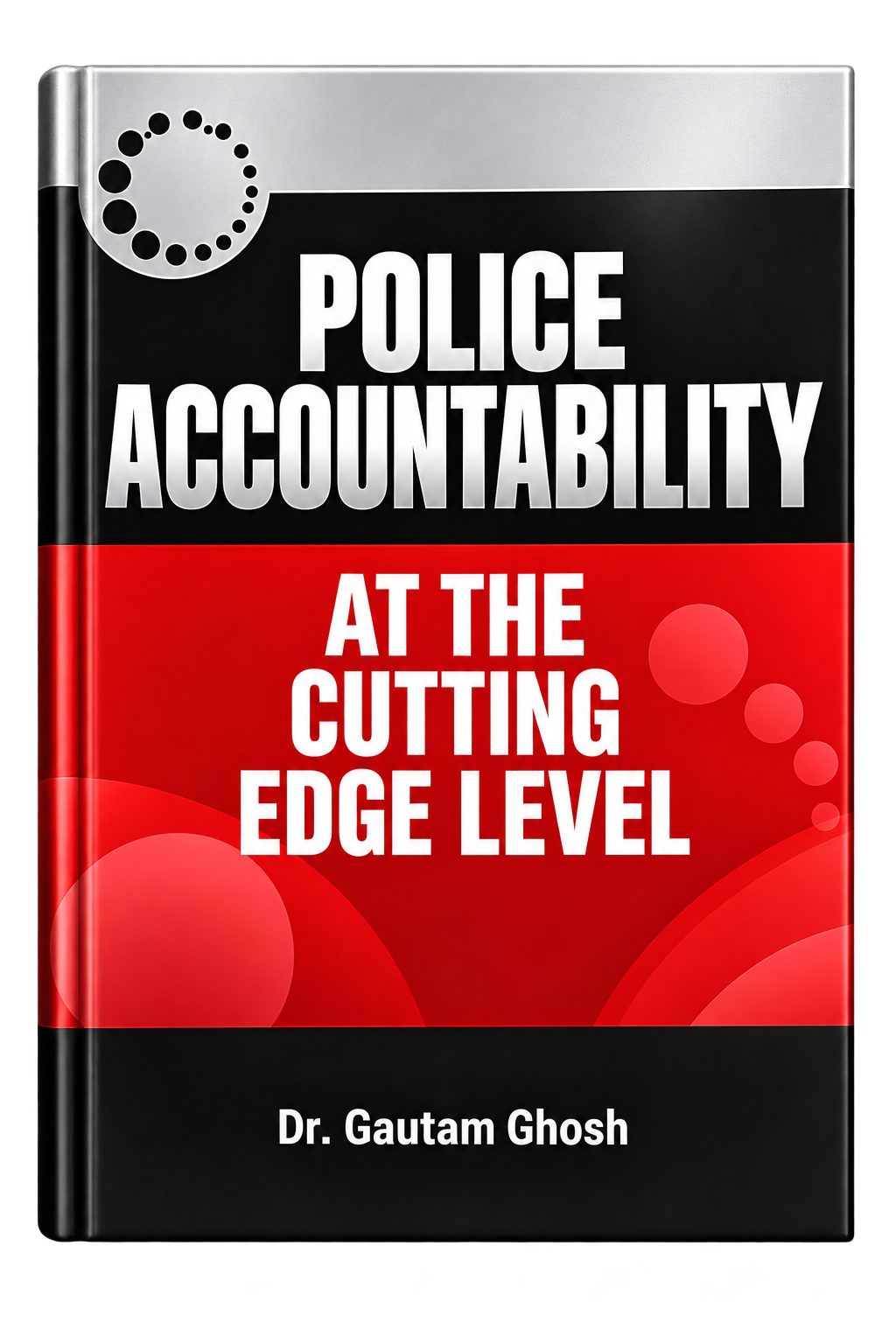
BOOK 01
Police Accountability at the Cutting Edge Level
This work examines civilian oversight, police–public relations and institutional responsibility, with a focus on accountability in policing.
View Catalogue Record ↗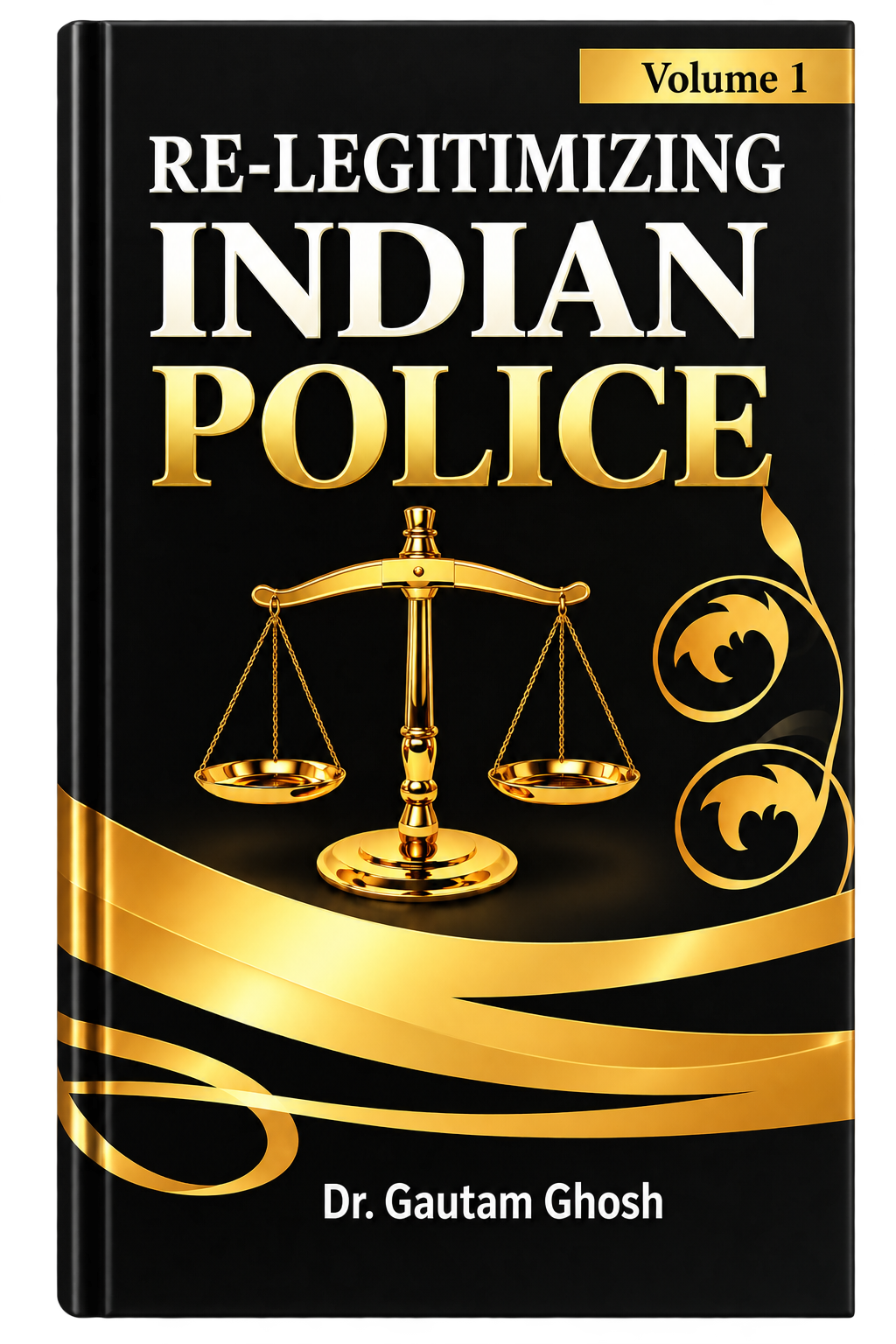 Volume 1
BOOK 02
Re-Legitimizing Indian Police
Volume 1 extends the inquiry into policing and public legitimacy, examining institutional responsibility and the relationship between police and society.
Read More ↗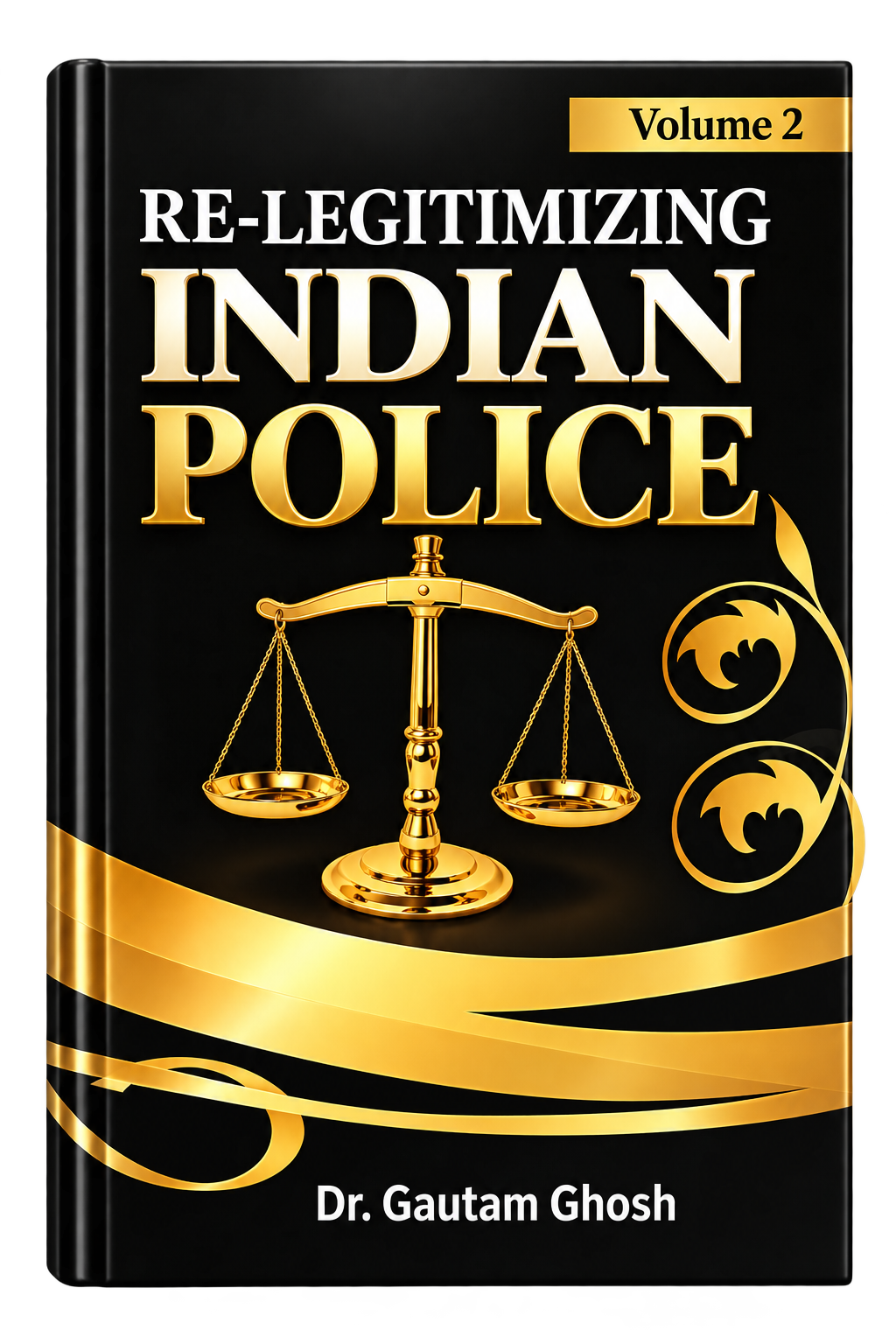 Volume 2
BOOK 03
Re-Legitimizing Indian Police
Volume 2 continues the exploration of policing, power, institutional responsibility and the foundations of public legitimacy.
Read More ↗Global Gravitas
Scholarship Across Continents.
Ideas That Endure.
Dr Gautam Ghosh’s work forms part of LSE Library’s officially Designated collections, recognised for their outstanding national and international importance. His books are also held in national libraries, universities, research academies and governmental institutions across the world.

Police Accountability at the Cutting Edge Level · LSE Library catalogue record
Open catalogue record ↗
Police Accountability at the Cutting Edge Level · Shelfmark YD.2007.a.8736
Open catalogue record ↗
Police Accountability at the Cutting Edge Level · Catalogue record 4350834
Open catalogue record ↗
Police Accountability at the Cutting Edge Level · Call number HV8247 .G49 2007
Open catalogue record ↗
Police Accountability at the Cutting Edge Level · Shanghai Library catalogue record
Open catalogue record ↗
Police Accountability at the Cutting Edge Level · Catalogue record 4108
Open catalogue record ↗Academic Authority
Published. Preserved.
Referenced.
Police Accountability at the Cutting Edge Level appears in university course bibliographies, institutional library records and published research on policing.
University & college reading lists 9 universities · 1 additional college syllabus
The documents below list the book as suggested reading, a reference or a textbook. Dates identify the reviewed editions; inclusion does not establish current classroom use.
Rani Channamma University · Belagavi
B.A. Criminology and Forensic Science, effective 2024–25 onwards: Police Organization in India, reference 3, PDF page 31.
Karnatak University · Undergraduate curriculumB.A./B.Sc. Criminology and Forensic Science, effective 2021–22: Semester I open elective Police Organization in India, reference 4, PDF page 11. University syllabus hosted by Karnatak Science College, Dharwad.
University of MysoreCriminology and Forensic Science syllabus: reference 4, printed page 14. The university-hosted English-version copy identifies the book by Gautam Ghosh, A.P.H., 2007.
Davangere UniversityM.A./M.Sc. Criminology and Forensic Science, 2018–19 onwards: suggested reading, item 5, PDF page 18.
Acharya · B.A. syllabusSemester III, Police Science, Paper 3.1: suggested reading, item 4, PDF page 9. Syllabus hosted on the institutional website.
JIS University · LL.M. Criminal LawPolice and Prison (PLC3005). Suggested reading, item 11; R24 curriculum, PDF page 55.
GGS Indraprastha University · LNJN NICFSM.A. Criminology: Policing and Law Enforcement (CRIM-701). Suggested reading; syllabus effective 2011–12.
Karnatak University, DharwadM.Sc. Forensic Science and Criminology, 2024–25 onwards. Reference list, printed page 37. University syllabus hosted by Karnatak Science College.
Karnatak University · Earlier curriculumM.A./M.Sc. Criminology and Forensic Science: Police Administration & Police Science. Revised 2018–19 curriculum; PDF page 30. An additional edition, not a separate institutional adoption.
Bengaluru City UniversityB.A./B.Sc. Criminology and Forensic Science: Police Organization in India. Reference 4; 2025–26 onwards curriculum, printed page 34.
Haveri UniversityB.A. Criminology and Forensic Science: Police Organization in India. Reference 3; revised 2024 curriculum, PDF page 32.
Mohanlal Sukhadia UniversityM.A. Public Administration, Semester III: Police Administration (PAD9107T). Listed under Text Books, item 8; PDF page 18. Edition date not stated in the reviewed extract.
Library & institutional records 6 institutions
Kwara State University · Nigeria
Indexed university catalogue record 10526: Police Accountability: At Cutting Edge Level, Gautam Ghosh, A.P.H. Publishing Corporation, 2007. Live borrowing availability was not verified.
National Library of AustraliaCatalogue record 4350834 identifies the 2007 A.P.H. edition by Gautam Ghosh.
Gandhi Smriti Library · LBSNAACatalogue record 78083; call number 363.2 GHO; accession 93996.
Rajasthan Police AcademyAuthor-wise inventory, PDF page 128: Police Accountability, entry 5590, barcode 25551, item 68614. Re-legitimising Indian Police also appears at entries 5591–5592, barcodes 31131–31132, items 73313–73314.
State House Library · NigeriaIndexed State House Library catalogue: Police accountability: at the cutting edge level, by Gautam Ghosh, A.P.H., 2007; ISBN 8131301974. This is a library collection record; current borrowing availability should be checked with the library.
Panjab University · ChandigarhUniversity library inventory through 2018–19: entry 72, accession 670112. A historical inventory record.
Published research citations 4 publications
References by individual authors; these do not imply endorsement by their institutions.
Police System in India—Issues and Challenges—A Critical
Study
Dr. Sunita Adhav · Pimpri Law Review Journal, 2(2), 2023, hosted by Dr. D. Y. Patil Law College. Footnote 6 on page 3 cites the book, pp. 15–25. The author is identified as Officiating Principal, DES Shri Navalmal Firodia Law College, Pune.
Good Governance and Police Administration in PakistanKaleem Imam · Journal of Political Studies, 18(2), 2011. University of the Punjab journal archive; bibliography includes Ghosh’s book.
Police Accountability in IndiaDaljit Kaur · International Journal of Multidisciplinary Educational Research, 11(5:3), May 2022, pp. 79–83. Book cited in the references.
Navigating the Complex Terrain: Exploring Issues and Challenges in Police AdministrationSurabhi Mishra · The Academia, 1(II), 2023, pp. 40–46. Book included in the reference list.
Further catalogue links & research leads
Preserved for completeness, separately from confirmed records.
Mohanlal Sukhadia University · Additional syllabus
link
Additional M.A. Public Administration Semester III file supplied for the source register (11867). This URL returned an access error during review. The separate 11879 syllabus above independently confirms the textbook listing.
Provisional Authority · Beatrice Jauregui (2016)University of Chicago Press book, available through De Gruyter Brill. Source supplied for citation checking; the specific reference to Gautam Ghosh could not be verified in accessible publisher text during this review.
London School of Economics and Political ScienceOriginal-site catalogue link retained. Catalogue requires JavaScript; item contents could not be independently read during this review.
University of CalgaryOriginal-site catalogue link retained. Catalogue requires JavaScript; current holding details await confirmation.
Shanghai LibraryOriginal-site record link retained. The catalogue presented a verification screen during this review.
Mahajana College · Institutional syllabusSearch-indexed institutional PDF includes the title in a textbook list. Full document access was unavailable; course and edition details remain unconfirmed.
KIMS Bengaluru · B.A. NEP syllabusSearch-indexed institutional PDF includes the title. Full document access was blocked during review.
Panjab University · M.A. Police AdministrationA secondary copy of the 2023–24 syllabus contains the title. The original university PDF could not be retrieved; course-list status awaits primary confirmation.
KIU Journal of Social Sciences · Indexed citationThe journal PDF is indexed with a citation to Ghosh (2007). Article metadata and full text remain to be checked.
Custodial Torture: A Two Years Prospective StudyA ResearchGate record is indexed with a reference to the book. Publisher-level confirmation remains outstanding.
British Library and National Library of India holdings have also been reported in biographical material. Matching readable catalogue records were not located in this review.
Sources reviewed 24 September 2026. This is a documented research register, not an exhaustive global holdings or citation count. Duplicate syllabus editions are grouped by university.
05 / Engagement
Defending Democracy.
Driving Dialogue.
International engagement, diaspora leadership, Indian politics and election observation in Bangladesh—public work extending across institutions, nations and communities.
Across Nations · Continuing
International Engagement
Advancing institutional, civic, policy and business dialogue through international networks and cross-border initiatives. Explore International Engagement ↗Indian Diaspora · Worldwide
Diaspora Leadership
Serving the Indian diaspora through Upper Chambers and building institutional connections through the India–Canada Consortium. Visit Upper Chambers ↗India · National
Indian Politics & Public Affairs
Experience in Indian politics, political strategy, party organisation, public advocacy and democratic engagement. View Public Record →Bangladesh · 2018
International Election Observation
International election observation with the SAARC Human Rights Foundation during Bangladesh’s general election. Read Event Coverage ↗Inclusion & Belonging
Inspiring Inclusion. Building Belonging.
A commitment to wider participation in education, civic dialogue and cultural life—with respect for difference and the dignity of every person.
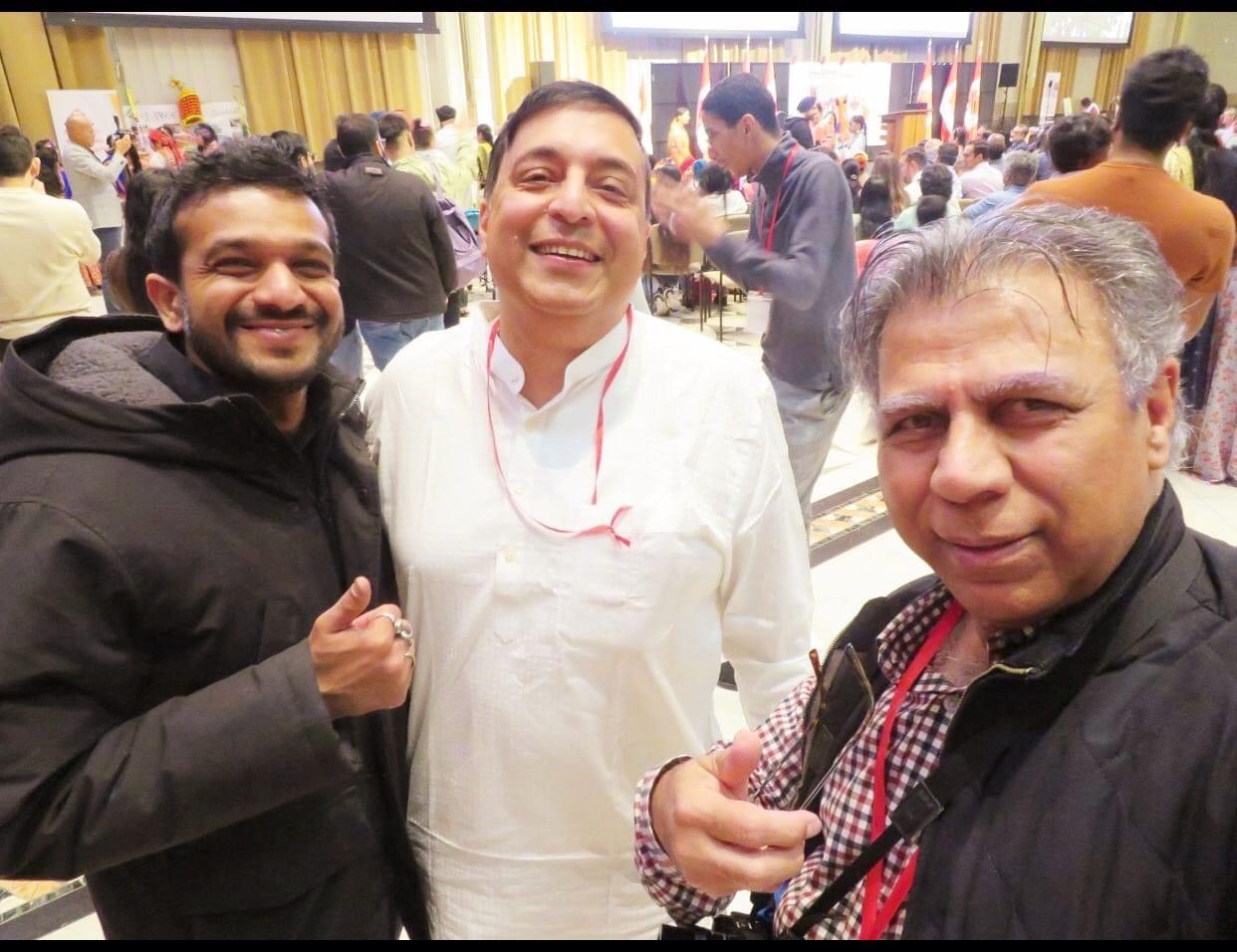
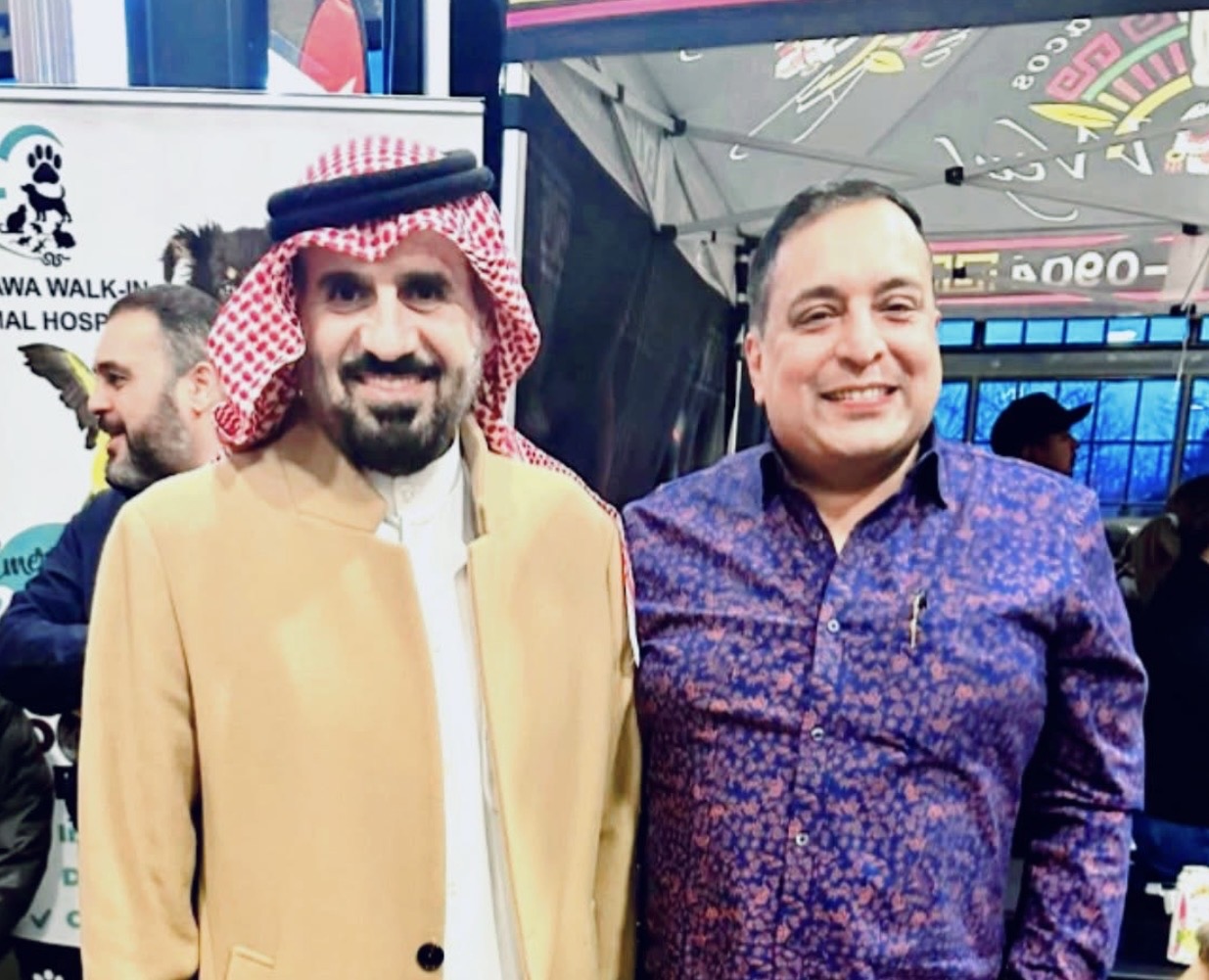
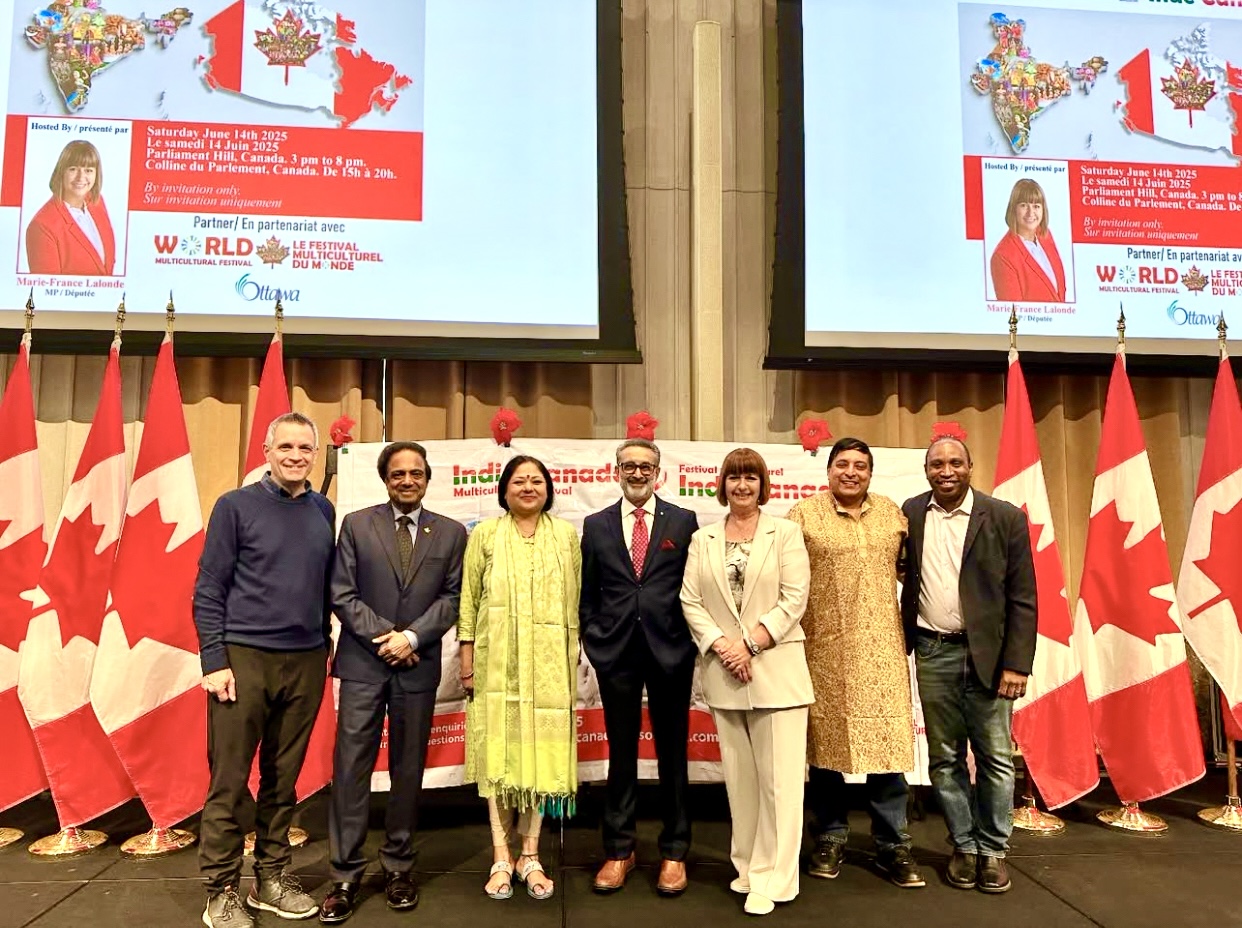
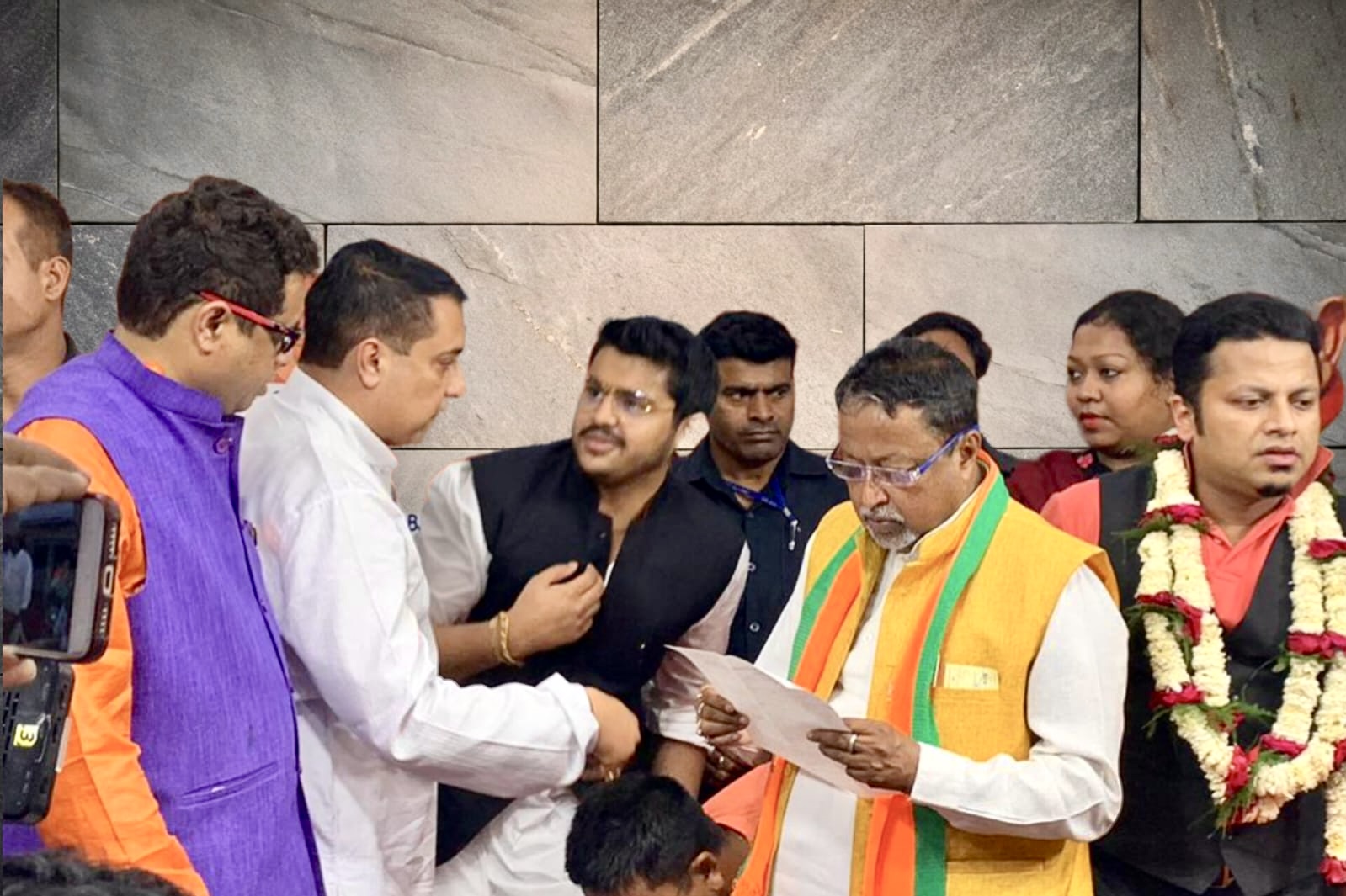
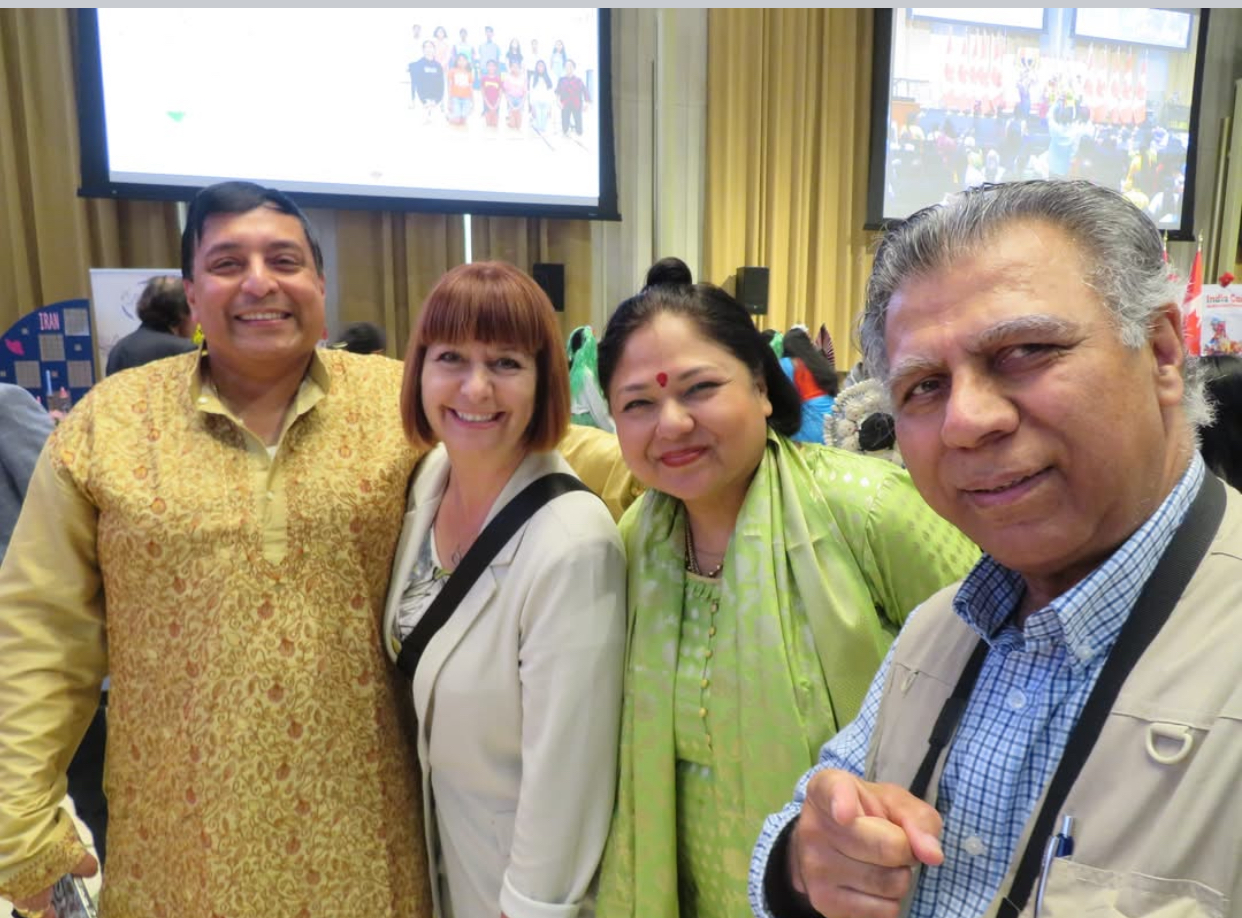
Moments
A visual record of public, professional and international engagement.

06 / Institutional Reach
Institutional Recognition.
International Reach.
Upper Chambers
International legal practice serving the Indian diaspora worldwide and supporting cross-border institutional work.
Visit institution ↗India–Canada Consortium
Dialogue connecting enterprise, institutions and communities.
Visit institution ↗World Multicultural Festival
Cultural exchange, inclusion and community participation.
Visit institution ↗Education & Charitable Work
Dr B.G. Memorial Trust
Supporting education, dignity and access to opportunity.
St Peter’s School & College
Education forms part of the Trust’s public-service work. Collegedunia identifies St Peter’s College, Kolkata, as a unit of B.G. Memorial Trust.
Read the college directory listing ↗Community support
Dr Ghosh reports support for schools in West Bengal, Missionaries of Charity and education for blind and visually impaired learners.
Charitable activities are described from information supplied by Dr Ghosh. The directory listing confirms the college–Trust association, not an endorsement or a formal charitable partnership.07 / Public Record
Reported. Referenced.
On the Record.
Original reporting, wire syndication and opinion profiles are identified by format.
ANI · Original WireWest Bengal political transition · 11 March 2019↗The Indian Wire · ReportPolitical experience and earlier work in Rahul Gandhi’s core
team↗Deccan Chronicle · ANIContemporary coverage of the March 2019 transition↗Reuters · EuronewsInternational election observation in Bangladesh↗Dhaka TribuneElection observers report orderly and participatory
polling↗Times Asian · Opinion ProfileProfile of the author’s work on policing and public trust ·
2020↗
Global Scholarly Footprint
Scholarship with a documented reach.
Explore the book’s place in university reading lists, library collections and published research—with direct links to the underlying records.
Explore the academic record ↗Includes LL.M. Criminal Law, criminology, forensic science and public administration curricula.
08 / Public Desk
The continuing
conversation.
Follow current commentary, speeches and public interventions through the official platforms.
Articles & Professional Dialogue
Law. Governance.
International Cooperation.
Read Dr Ghosh’s articles and current commentary on public policy, institutional accountability and India–Canada relations.
09 / Contact
Contact Dr Ghosh.
For leaders, businesses, institutions and media professionals across India, Canada and the United States, get in touch regarding your enquiry.
Start the Conversation.
Please complete the form below. Your enquiry will be directed to the appropriate office contact.